
In the current hyper-competitive labor market, the traditional “post and pray” method of recruitment is not just obsolete, it is a recipe for business stagnation. Today, the power has shifted decisively into the hands of the talent. Whether you are a Fortune 500 in-house team or a boutique recruiting agency, your ability to master candidate engagement is the single greatest predictor of your hiring success.
This guide serves as a 360-degree deep dive into the world of effective candidate engagement. We will move beyond surface-level tips to explore the candidate engagement model, the impact of recruiting data analytics, and the granular candidate engagement strategies required to win over top-tier talent in 2026.
Defining the Importance of Candidate Engagement
Before we dive into the “how,” we must understand the “why.” The importance of candidate engagement cannot be overstated because, in 2026, a candidate’s experience during the hiring process is viewed as a direct reflection of what it’s like to work at your company.
1. The Financial Impact of Poor Engagement
High applicant engagement issues lead directly to “ghosting” and high drop-off rates. According to industry data, companies with poor engagement spend 40% more per hire due to extended time-to-fill metrics. When a candidate disengages, you aren’t just losing a person; you are losing the thousands of dollars already spent on sourcing and initial screening.
2. Employer Brand Equity
In a digital-first world, every interaction is a brand touchpoint. Disengaged candidates are 80% more likely to share their negative experiences on platforms like Glassdoor or Reddit. Conversely, a highly engaged candidate—even one who doesn’t get the job—becomes a brand advocate.
3. The Quality of Hire
Top-tier talent (the “A-players”) usually have multiple offers. They don’t choose the company with the highest salary alone; they choose the one that respected their time, communicated clearly, and made them feel valued. Effective candidate engagement is the filter that ensures you don’t just hire someone, but you hire the best someone.
Stages in Candidate Engagement: The Recruitment Marketing Funnel
To master engagement, we must view recruitment as a sophisticated blend of marketing and sales. Just as a marketing funnel tracks a consumer’s journey from discovery to purchase, the candidate engagement journey maps a talent’s evolution from a complete stranger to a brand advocate.
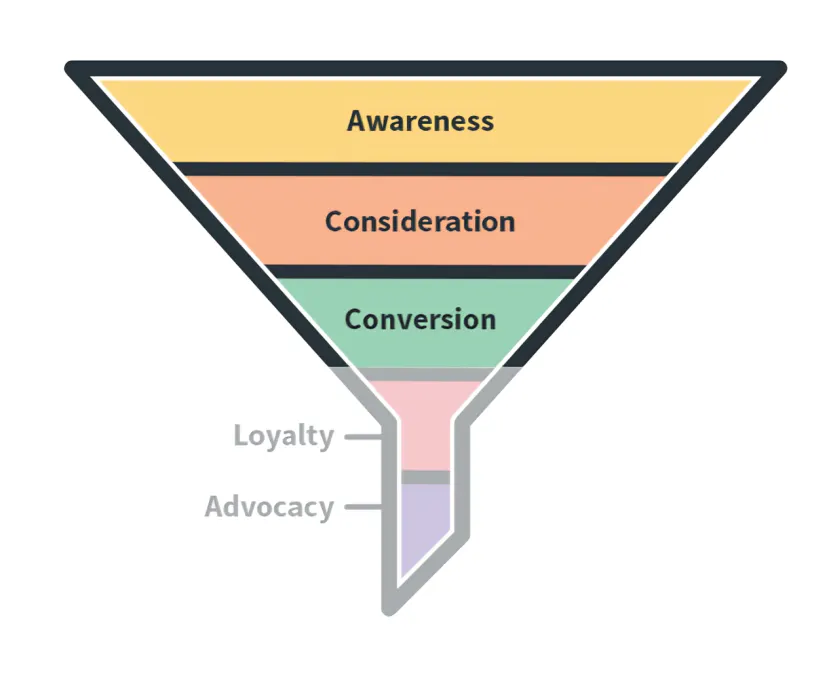
By translating the traditional marketing funnel into a recruitment framework, we can identify exactly how to engage passive talent who aren’t yet looking to move.
1. Awareness: Sparking the Interest
At this stage, the candidate is likely unaware of your employer brand or team culture. They may not even realize they are open to a new challenge.
- The Goal: To trigger recognition. You want potential applicants to realize your organization exists as a premier place to work.
- Engagement Strategy: Present high-value information (industry insights, team wins, or culture snapshots) in an attractive manner. It isn’t about the job yet; it’s about the brand.
2. Consideration: Evaluating the Option
Here, a passive candidate has seen your initial outreach or social content and expressed initial interest. They are now contemplating a job switch but remain undecided.
- The Goal: Focus their attention on you as the best career option.
- Engagement Strategy: Highlight your unique team dynamics and specific project impacts. This is where personalized follow-ups—mentioning their specific expertise—move the needle from “maybe” to “tell me more.”
3. Conversion: The Decision Point
In this phase, the candidate confirms their interest by proceeding with an application or interview. The ultimate decision in this stage is whether they will accept the job if offered.
- The Goal: Excite the candidate about the prospect of becoming an employee.
- Engagement Strategy: Provide granular detail about benefits, growth pathways, and day-to-day life. Frictionless communication here prevents disengagement due to “lost attention” or competing offers.
4. Loyalty: Retaining the Talent
Engagement does not end with the signed contract. The loyalty stage measures an employee’s decision to stay and grow within the company.
- The Goal: Long-term retention and engagement.
- Engagement Strategy: Consistent feedback, clear career progression, and maintaining the “Employer Brand” promises made during the recruitment phases.
5. Advocacy: Turning Employees into Recruiters
The final stage of the funnel is when an employee becomes a “brand ambassador.” They actively promote the employer brand within their own networks.
- The Goal: Create a self-sustaining recruitment engine.
- Engagement Strategy: Empowering employees to share their stories on LinkedIn and rewarding internal referrals. Advocacy is the highest form of successful candidate engagement.
The Candidate Engagement Model: Mapping the Journey
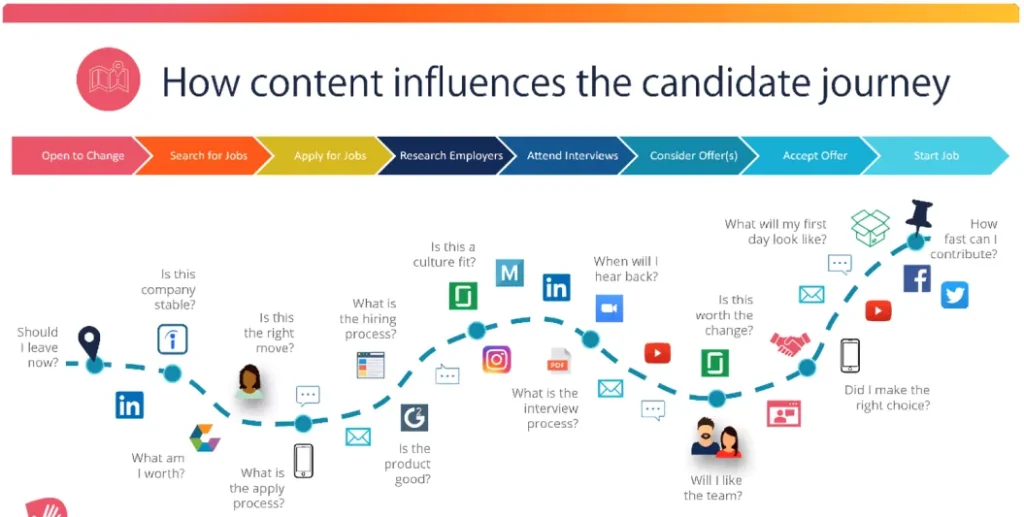
To truly improve candidate engagement, you cannot treat it as a single step in the process. It must be a continuous, high-precision loop. To ensure a positive experience, employers must move beyond “gut feeling” and actually map the candidate journey with precision.
Mapping the candidate journey provides a visual representation of how a candidate moves through the recruitment funnel—from the very first spark of interest to their 90th day on the job. By identifying every touchpoint (emails, SMS, calls, or social media pings), you can identify friction points where talent is most likely to drop off.
We categorize the candidate engagement model into five strategic phases:
Phase I: Attracting, Sourcing & Pre-Application
Engagement starts before a candidate even hits “Apply.” This involves your employer branding, the clarity of your job descriptions, and your presence on job boards and niche social communities.
- The Touchpoint Strategy: Are your LinkedIn ads and social media posts leading to a clear, mobile-optimized landing page?
- Talking Point: If your application takes longer than 5 minutes or requires a candidate to re-upload data already present in their resume, your engagement is failing before it begins.
Phase II: Pre-screening & Initial Active Evaluation
This is the “Black Hole” phase where most applicant engagement issues occur. It covers the period between the application submission and the first human interview.
- The Goal: Radical Transparency. Candidates should receive an immediate automated acknowledgement, followed by a clear timeline of when they will hear from a human.
- The Touchpoint Strategy: Implement an SMS “Status Update” bot to keep candidates informed. Knowing they are “Under Review” is better than hearing nothing at all.
Phase III: The Assessment & Testing Experience
Depending on the role, you may require technical tests or personality assessments. This is a high-risk phase for drop-offs.
- Best Practice: Ensure the assessment is relevant and respectful of their time.
- The Touchpoint Strategy: Provide a “Why” for the test. Explain how this assessment helps them showcase their specific skillset, rather than just being another hurdle.
Phase IV: The Interview Experience (Digital to Personal)
Engagement here moves from automation to human connection. The quality of your hiring managers’ questions and the punctuality of your feedback loops are the primary drivers of success.
- Final Interview Strategy: For final-stage candidates, engagement should be “white-glove.” This might involve a call from a future peer or a video from the CEO welcoming them to the final round.
- The Goal: Make the candidate feel like they are already a part of the solution, not just a number in a queue.
Phase V: Post-Offer, Onboarding & Beyond
Engagement doesn’t stop at the signature. The “Pre-boarding” phase—the time between signing the contract and the first day—is where “buyer’s remorse” happens.
- The Goal: Sustained Momentum. Continuous engagement here reduces first-year turnover by up to 30%.
- The Touchpoint Strategy: Send a “Welcome Kit” or a personalized SMS from the team a week before they start. Introduce them to their new role and set them up for success from day one.
Deep-Dive Candidate Engagement Strategies
1. High-Touch Personalization at Scale
The most common mistake in candidate engagement strategies is over-automation. Candidates can smell a generic template from a mile away.
- Strategy: Use “Dynamic Personalization.” Mention a specific project from their portfolio or a recent post they shared on LinkedIn. Use automation for scheduling, but keep the messaging human.
2. Passive Candidate Engagement
Passive candidate engagement is an art form. These individuals aren’t looking for a job; they are looking for a career evolution.
- The Approach: Don’t pitch a job; pitch a conversation. Focus on “Problem-Solving” rather than “Requirement-Filling.”
- SEO Context: Passive candidates require a long-game strategy that utilizes niche candidate engagement ideas like “Talent Newsletters” or “Exclusive Industry Webinars.”
3. Radical Transparency and Feedback Loops
One of the candidate engagement best practices is providing feedback even when the answer is “no.”
- The “Feedback Loop” Model: If a candidate reaches the interview stage, they deserve a 5-minute phone call or a detailed email explaining why they weren’t selected. This single act can turn a rejected candidate into a future referral source.
4. Leveraging Recruiting Data Analytics
Data is the fuel for engagement. Platforms combining recruiting data analytics and candidate engagement allow you to see exactly where candidates are dropping off.
- Metric to Watch: “Response Time to Application.” If this exceeds 48 hours, your engagement score is in the danger zone.
Candidate Engagement Ideas for 2026
If you are looking for how to improve candidate engagement beyond the standard emails, consider these innovative approaches:
- Video Messaging: Replace the “intro email” with a 30-second personalized Loom or VideoAsk from the hiring manager.
- Interactive Job Previews: Let candidates “play” the role for 10 minutes through a simulation before they apply.
- Talent Communities: Create a Slack or Discord for prospective talent where you share company culture updates, not just job openings.
- SMS-First Communication: For high-volume or seasonal recruiting, SMS has a 98% open rate compared to 20% for email.
Top Tools Helping Recruiters Optimize Candidate Engagement Strategies
You cannot scale engagement manually. Here are the top tools helping recruiters optimize candidate engagement strategies in 2026:
1. AI-Powered Conversational Assistants (Chatbots)
Tools like Mya or Paradox handle the “low-level” engagement, answering FAQs 24/7 so candidates never feel ignored.
2. CRM and Nurture Platforms
Beamery and Eightfold.ai are industry leaders in platforms combining recruiting data analytics and candidate engagement. They allow you to build “Talent Pools” and automate the nurture of passive candidates over months or years.
3. Video Engagement Tools
Spark Hire or HireVue for structured interviews, and VideoMyJob for creating branded video content that engages talent on social media.
4. Experience Survey Tools
Survale allows you to capture real-time feedback from candidates at every stage of the funnel, helping you identify applicant engagement issues before they go viral on social media.
Candidate Engagement Best Practices for Agencies vs. In-House
The approach differs based on your business model:
- For In-House Teams: Your engagement should focus on Culture and Mission. You are selling a long-term home.
- For Recruiting Agencies: Your engagement should focus on Expertise and Advocacy. You are selling yourself as a career coach who will represent the candidate’s best interests to multiple employers.
FAQs: Real-World Candidate Engagement Questions
Q: Why are my candidates ghosting me after the first interview? A: This is one of the most common applicant engagement issues. Usually, it’s due to a lack of “Next Steps” clarity. If a candidate leaves an interview without knowing exactly when they will hear back, they lose emotional investment.
Q: How often should I follow up with a passive candidate? A: Follow the “Value-Add Rule.” Don’t just “check-in.” Send them an article relevant to their field, a company update, or a congratulatory note on a recent achievement. Aim for once every 4-6 weeks to stay top-of-mind without being a nuisance.
Q: Can automation actually hurt candidate engagement? A: Yes, if it is poorly implemented. Automation should remove friction (scheduling, FAQs), not replace the relationship. If a candidate feels like they are talking to a robot when they should be talking to a recruiter, they will disengage.
Q: What is the most important metric for candidate engagement? A: The Candidate Net Promoter Score (cNPS). Asking candidates “Based on your experience, how likely are you to recommend us to a friend?” provides the most honest look at your engagement health.
Q: How to engage candidates in high-volume recruitment? A: Start with an interview-first approach that invites candidates to complete a mobile-friendly chat interview immediately after applying. Follow up with smart reminders at 12 and 36 hours, provide same-day feedback to everyone, and use self-scheduling to eliminate coordination friction. These candidate engagement activities improve completion and reduce drop-off.
Conclusion: The Future of Engagement
As we look toward the remainder of 2026, effective candidate engagement will be driven by empathy, powered by data, and scaled through smart technology. Companies that view candidates as “units of labor” will fail. Companies that view candidates as “valued customers” will thrive.
Whether you need to overhaul your candidate engagement strategies or implement new platforms combining recruiting data analytics and candidate engagement, the time to act is now.
Contact Redirecruit to learn how our expert sourcing and engagement models can transform your hiring pipeline.