
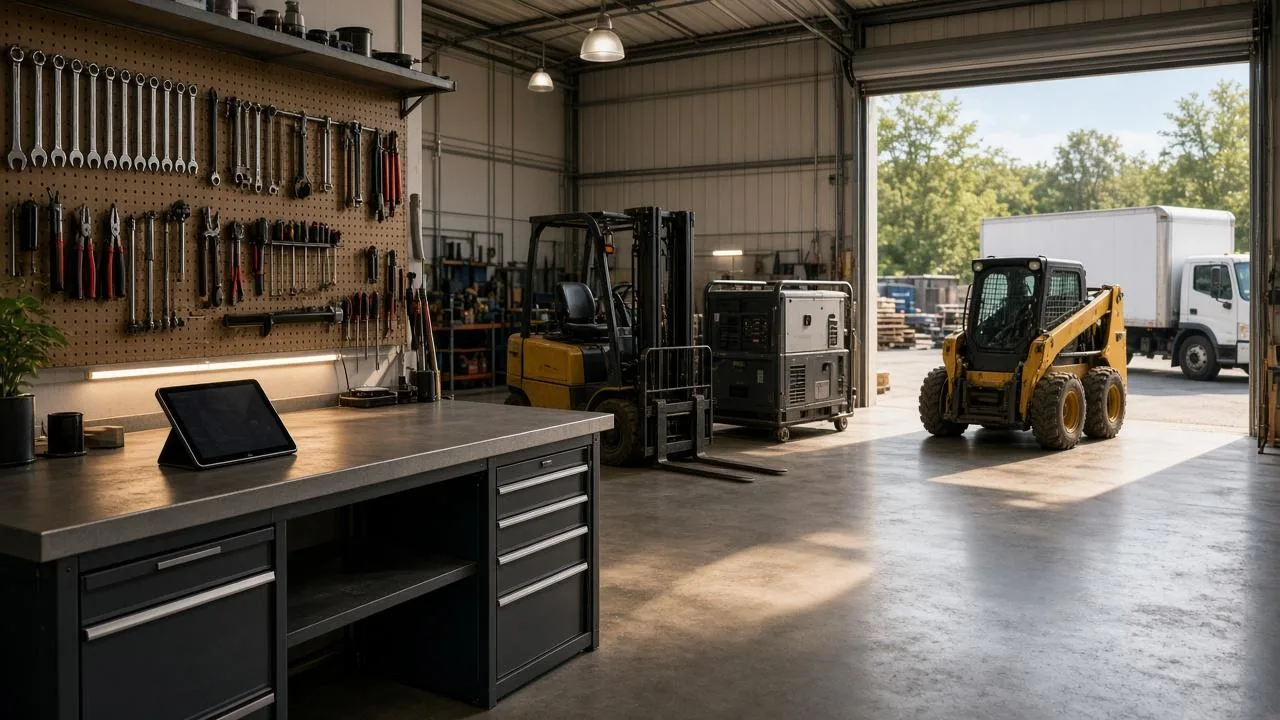
Equipment is the visible part of these businesses. Excavators, forklifts, CNC machines, delivery trucks, and rental fleets get the budget and the headlines. None of it earns money without the people who service it, run it, move it, and sell it.
That is where hiring gets hard. Construction, manufacturing, and logistics compete for the same pool of technicians, operators, and licensed drivers, and the data shows how tight that pool is. This guide covers the roles these industries share, how hiring differs in each one, how to screen for hands-on skills, and how to handle seasonal peaks and technician shortages. Equipment rental gets its own section, because it sits across all three.
Why Hiring for Equipment-Heavy Industries Is Harder Than It Looks
Three separate sources tell the same story. The Associated Builders and Contractors estimates construction needs about 349,000 net new workers in 2026 and 456,000 in 2027, mostly because veterans are retiring. Deloitte and The Manufacturing Institute project that U.S. manufacturing could need 3.8 million new employees by 2033, with about half of those jobs at risk of going unfilled. And the BLS expects about 24,400 openings a year for diesel service technicians and mechanics, a role all three industries rely on.
Volume is only part of the problem. These roles also need certifications, safety habits, and hands-on judgment that a résumé rarely proves. A hiring process built for office roles tends to stall here.
The Roles These Industries Compete For
Most equipment-heavy businesses, from a single-branch rental shop to a regional plant or fleet, depend on the same core roles. The table below shows where each one shows up and what usually goes wrong when hiring for it.
| Role | Where it shows up | What to screen for | Common hiring snag |
|---|---|---|---|
| Service and maintenance technicians | Rental, construction fleets, plants, trucking | Diagnostic skill, certifications, safe work habits | Long searches and pay competition across industries |
| Equipment operators | Construction, infrastructure, yards | Machine-specific experience, site safety record | Confirming real hours on specific machines |
| CDL drivers and delivery staff | Logistics, rental, construction supply | License and endorsements, driving record, reliability | Licensing and checks narrow the pool and add time |
| Production and machine operators | Manufacturing, industrial plants | Quality focus, shift flexibility, speed of learning | High-volume shift hiring with early turnover |
| Dispatch and operations coordinators | Logistics, rental, field services | Scheduling under pressure, systems comfort | Hard to judge until they are on the job |
| Safety and compliance coordinators | Construction, industrial sites | Regulatory knowledge, documentation habits | Few experienced candidates are actively looking |
| Branch, site, and plant managers | All three industries | People leadership, cost and utilization control | Promoting a top technician without leadership readiness |
Swipe sideways to see the full table on mobile.
How Hiring Differs Across Construction, Manufacturing, and Logistics
The roles overlap, but the pressure points are different in each industry.
Construction, Engineering, and Infrastructure
Construction hiring moves in waves. A contract is awarded, and suddenly a crew needs to be staffed. ABC’s chief economist links the shortage mainly to retirements and to fast growth in specialized work, such as data center and chip plant projects. That means the experienced operators and supervisors you need are often already employed and not scanning job boards.
What helps most is building a bench before the next project lands. Keep in touch with past crew members, verify certifications and safety records early, and treat apprenticeships as a real pipeline. Our guide to building a talent pipeline for hard-to-fill roles explains how to keep that bench warm between projects. If you are hiring across this sector, our construction and infrastructure hiring page shows how we support it.
Manufacturing, Industrial, and Automation
The Deloitte and Manufacturing Institute research describes two separate gaps: a skills gap and an applicant gap. In plain terms, there are not enough people applying, and many who do apply lack the higher-level technical or digital skills plants now need.
For hiring teams, that shifts the focus from checking past job titles to checking how someone thinks. Ask how they would troubleshoot a recurring fault, how fast they picked up the last new system, and how they handle shift work. Strong learners can be trained on your equipment, and training is often cheaper than a long vacancy. See how we support plants and OEMs on our manufacturing and industrial hiring page.
Transportation and Logistics
Drivers are the obvious pressure point, but the story is more nuanced than “not enough drivers.” At the American Trucking Associations’ 2025 conference, its CEO said the lack is not people holding CDLs but qualified drivers who meet high standards of professionalism and safety. That is a screening and retention problem, not only a sourcing one.
For employers, that means building required checks into the timeline from day one instead of bolting them on after an offer. Our article on reducing time-to-hire without cutting corners shows how to front-load verification so safety steps do not become the bottleneck. Our transportation and logistics hiring page covers the roles we recruit for.
Equipment Rental: One Angle Across All Three
Equipment rental businesses touch construction, industrial, and logistics customers at the same time, so they feel every one of these pressures. The American Rental Association projects U.S. construction, industrial, and general tool rental revenue at $83.5 billion in 2026, with growth continuing through 2028. That is moderate growth, not a boom, which means rental firms need to hire carefully and keep the people they train.
A typical rental team includes:
- Counter and inside sales reps who quote jobs, check availability, and write contracts
- Outside sales and account managers who build and keep contractor relationships
- Service technicians who inspect, maintain, and repair the fleet
- Delivery drivers and yard staff, many of whom need a commercial license
- Dispatch coordinators who plan routes and pickups
- Branch managers who own utilization, safety, and profit
Rental also has strong seasonal swings, which is covered in its own section below.
Skills to Screen For Beyond the Résumé
Equipment-heavy roles reward traits that rarely show up on a CV. Build these into your scorecard before you start interviewing.
- Mechanical aptitude. Even counter staff do better when they understand what a machine does and which attachment a job needs.
- Problem-solving under pressure. A breakdown at a customer’s site at 7 a.m. needs someone who can find a fix or a replacement fast.
- Safety mindset. From loading trailers to explaining safe operation, carelessness is expensive and dangerous.
- Customer empathy. Contractors and plant managers are often on deadline. Calm, solution-focused staff build loyalty.
- Comfort with technology. Tablets, scanning apps, e-signatures, and digital inspections are now part of the job.
Behavioral questions work well for these roles because they reveal what someone actually did, not what they say they would do. A few to start with:
- Tell me about a time you spotted a safety issue before it became an incident. What did you do?
- Describe a breakdown or delay you had to solve with limited resources.
- Walk me through how you would diagnose a machine that keeps failing the same way.
- Tell me about a time you handled an angry customer or a frustrated coworker.
Our guide to strategic interview questions shows how to score answers consistently, and our piece on how recruiters judge decision-making skills helps with the pressure-handling questions.
Handling Seasonal and Peak Demand
Demand in these industries is rarely flat. Construction peaks in warmer months, events cluster around holidays and summer, storm season creates sudden spikes in demand for generators and pumps, and logistics surges before major retail periods. Hiring full-time staff for peak levels leaves you overstaffed the rest of the year.
Many employers use a core permanent team plus flexible workers for peaks. If you are deciding how to structure that, it helps to understand the difference between temporary staffing, contract staffing, and a contingent workforce, since each has different trade-offs in cost, commitment, and speed to productivity.
Some practical tips for peak hiring:
- Start recruiting early. Begin hiring drivers and yard staff six to eight weeks before the busy season.
- Build a rehire list. Good seasonal workers from last year are your fastest, lowest-risk hires.
- Cross-train your core team. A counter rep who can also run a forklift gives you flexibility when volume spikes.
- Keep onboarding short and structured. Checklists and short training videos get new staff working safely within days.
- Line up sourcing support in advance. A steady flow of pre-vetted candidates is easier to build before the rush than during it. Our Candidate Sourcing service is built for exactly this kind of lead time.
Solving the Technician Shortage
Technicians are the hardest hire for most equipment-heavy employers. The BLS reports a median wage of $61,770 a year for diesel service technicians and mechanics as of May 2025, and projects 4% employment growth from 2025 to 2035. Rental shops, fleets, dealerships, and plants all hire from the same pool, so pay and growth paths decide who wins.
A clear career ladder is one of the cheapest retention tools available:
Beyond the ladder, four moves tend to work:
- Grow your own. Partner with local trade schools and community colleges, and offer apprenticeships that pay while people learn.
- Pay for certifications. Covering manufacturer training and certifications improves capability and retention.
- Show the path. Spell out how someone moves from apprentice to lead technician to service manager, with the pay changes attached.
- Remove admin friction. Technicians want to fix machines, not fill in paperwork. Mobile work orders and digital inspection forms make the job more appealing.
Tools That Help New Hires Succeed
Good hiring is only half the job. Nothing frustrates a talented new hire faster than double-entering data, hunting for paper tickets, or calling three people to learn whether a machine is available. Better tools shorten onboarding because new staff learn one system instead of a maze of spreadsheets, and they remove daily friction that pushes good people out the door.
The right tool depends on the business. Options range from general maintenance and digital inspection apps to rental-specific platforms such as EquipmentRentalSoftware.io, which handle availability, delivery tickets, and maintenance schedules in one place. Whatever you choose, the same data can also guide workforce planning. Utilization trends, delivery volumes, and maintenance backlogs show when you will need extra drivers or another technician before customers start complaining.
Retention: Keeping the People You Worked Hard to Hire
Replacing an experienced technician or account manager is expensive, and the cost shows up in lost customer relationships as well as recruiting fees. To keep turnover down:
- Review pay regularly, especially for skilled trades, since several industries are competing for the same people.
- Recognize good work publicly, such as the driver who saved a job or the tech who got a machine back fast.
- Offer predictable schedules where possible, even in a seasonal business.
- Invest in training and promote from within.
- Ask for feedback and act on it. Frontline staff usually know which processes are broken.
Retention also starts before day one. Our guide to improving candidate engagement covers how fast, clear communication during hiring sets the tone for the first year.
Where a Recruiting Partner Fits In
Hiring in these industries is spiky, specialized, and full of candidates who are not actively applying. That is hard to run alongside a busy operation. RediRecruit supports employers in construction and infrastructure, manufacturing and industrial, and transportation and logistics.
Our End-to-End RPO service runs on a success basis at 4% of annual salary, with a free replacement if a hire leaves within three months. If you only need help finding people, Candidate Sourcing is billed at $9 an hour. Companies in logistics and manufacturing that hire continuously may also want to read our guide to subscription-based recruitment.
Frequently Asked Questions
What are the hardest roles to fill in construction, manufacturing, and logistics?
Service technicians, equipment operators, and licensed drivers are usually the hardest. They need certifications and hands-on skill, and employers across several industries are competing for the same people.
How early should we start recruiting for seasonal peaks?
Start six to eight weeks before the busy season for roles like drivers and yard staff. Rehiring good seasonal workers from last year is the fastest, lowest-risk option.
Should we hire for experience or train people from within?
Do both. Hire experienced people for roles where mistakes are costly, and train strong learners for the rest. Apprenticeships and paid certifications often cost less than a long vacancy.
Is paying for certifications worth it?
Usually, yes. It builds capability on your equipment and gives people a reason to stay. Some employers add a retention agreement so the investment is protected.
What makes equipment rental hiring different?
Rental teams combine sales, technical, and delivery roles, and demand swings with the seasons. That means rental employers need both permanent specialists and a plan for flexible peak staffing.
How can we shorten time-to-hire for technicians without skipping checks?
Start verification earlier, use structured interviews, and set internal deadlines for feedback and approvals. Most delays come from internal steps, not from candidates.
Key Numbers at a Glance
| Measure | Figure | Source |
|---|---|---|
| New construction workers needed, 2026 | 349,000 | ABC, via NCCER |
| Manufacturing jobs at risk of going unfilled by 2033 | 1.9 million | Deloitte and The Manufacturing Institute |
| Diesel technician median pay, May 2025 | $61,770 per year | BLS |
| Diesel technician openings per year | About 24,400 | BLS |
| U.S. equipment rental revenue, 2026 forecast | $83.5 billion | American Rental Association |
Swipe sideways to see the full table on mobile.
Final Thoughts
The employers that win this decade will not be the ones with the biggest fleets or plants. They will be the ones that hire for attitude and aptitude, plan ahead for seasonal swings, build their own technician pipeline, and give their people tools that make the job easier. Do that well, and your team becomes the advantage competitors cannot simply buy.